01
Objective
Train professionals capable of developing, integrating, and managing information and communications technologies to improve organizational productivity.
Review the objective, graduate profile, competencies, and study areas that shape the Information and Communications Technologies Engineering program at ITSOEH.
01
Train professionals capable of developing, integrating, and managing information and communications technologies to improve organizational productivity.
02
Competencies in networks, software, databases, security, communication systems, technology projects, and emerging technologies.
03
Semester-based study plan with training in programming, networks, telecommunications, databases, management, and research.
04
Partnership with companies and institutions where students apply their competencies in real-world scenarios.
Train professionals who are competent in designing, developing, and implementing innovative solutions in information and communications technologies, under international standards and certifications, to meet social and industry needs.
Be a consolidated program recognized for educational quality, technology services, certified faculty, and certified labs, focused on cutting-edge technology to solve social and productive challenges in the region.
Train professionals capable of developing, integrating, and managing information and communications technologies that contribute to organizational productivity, with leadership, critical thinking, ethics, entrepreneurial vision, and commitment to sustainable development.
Programming foundations, object-oriented programming, web programming, mobile development, and software engineering.
Network fundamentals, computer networks, telecommunications, emerging networks, wireless technologies, and network security.
Database fundamentals, database workshops, distributed databases, and operating systems.
Calculus, linear algebra, probability, discrete mathematics, decision-making, and communications.
Electricity, circuits, computer architecture, connected devices, and embedded systems.
Management, projects, research, e-business, entrepreneurship, and sustainable development.
Design, implementation, and management of computer networks, communications, and connected infrastructure.
Application and system development for process management, decision-making, and organizational operations.
Design, administration, and management of secure, available, and reliable databases.
Implementation of controls, policies, and processes to protect information and evaluate technology systems.
Integration of hardware, software, sensors, and devices for purpose-built applications.
Technology project management, innovation, consulting, and digital solution creation.
The curriculum is organized across nine semesters and integrates core training, professional training, specialization, social service, complementary activities, and professional residency.
ITIC-2010-225 Curriculum no puede visualizarse en móviles.
Open curriculum PDF01
1st semester: programming foundations, mathematics, and ethics.
02
2nd semester: object-oriented programming, algebra, and statistics.
03
3rd semester: data structures, databases, and management.
04
4th semester: networks, programming II, circuits, and software engineering.
05
5th semester: networks, communications, distributed databases, and projects.
06
6th semester: web, telecommunications, operating systems, and wireless technologies.
07
7th semester: mobile development, emerging networks, HCI, and research.
08
8th semester: security, auditing, knowledge engineering, and e-business.
09
9th semester: professional residency and specialization.
Spaces designed to put theory into practice. We have enterprise-level equipment so you can prepare in real environments.
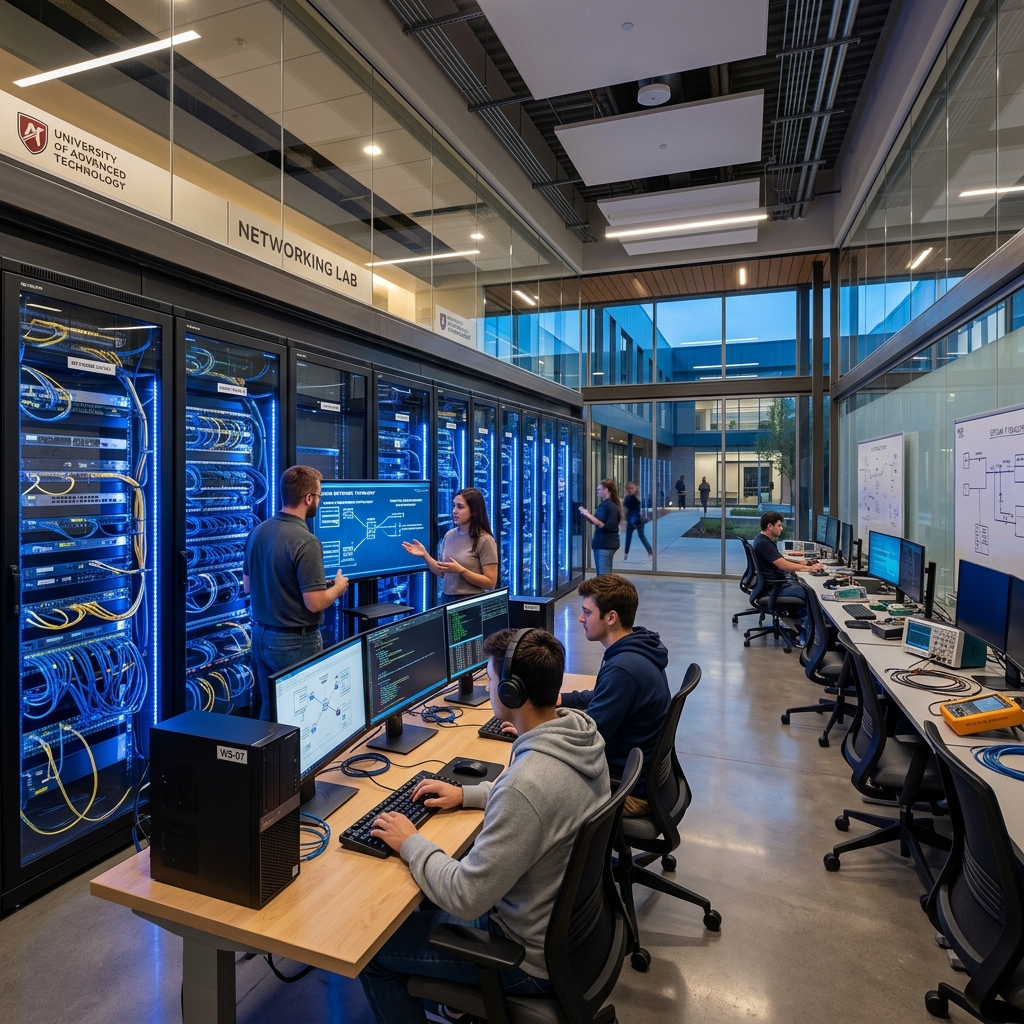
Learn infrastructure, routing, and telecommunications with physical Cisco equipment.
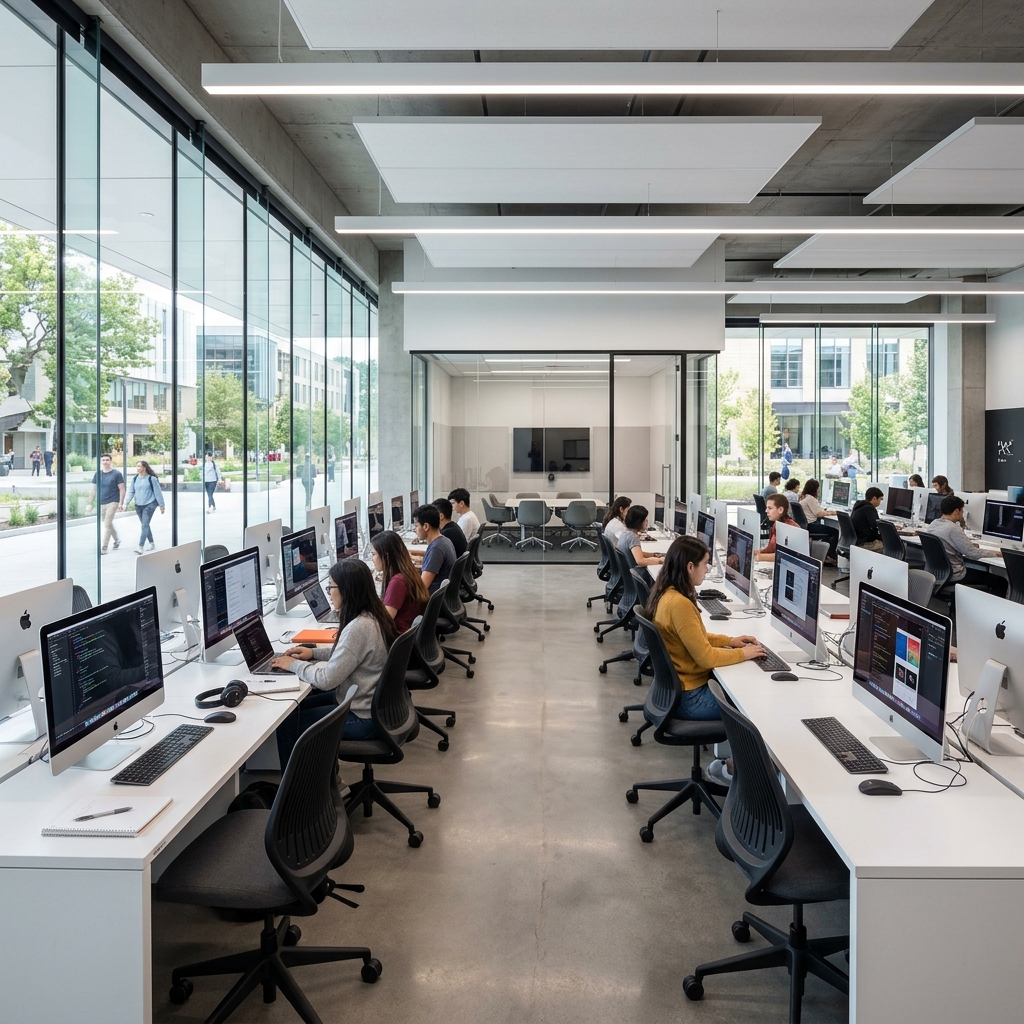
Software Development, Human-Computer Interaction (HCI), Artificial Intelligence, Data Structures, and Statistics.
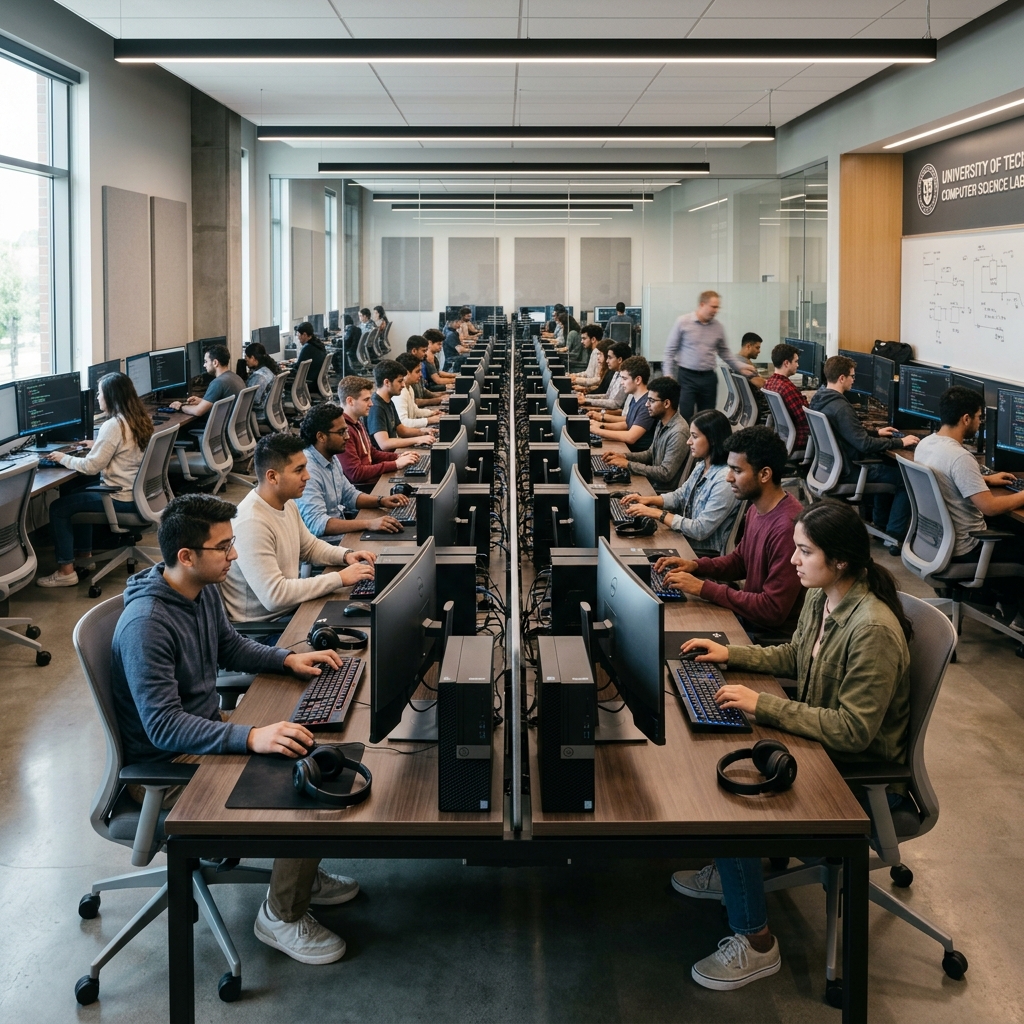
Programming, Operating Systems (Linux Debian), Computer Architecture, and Cloud Services on Windows PCs.
In addition to our core labs, we make extensive use of the university's STEM laboratories for competitions and technological innovation.
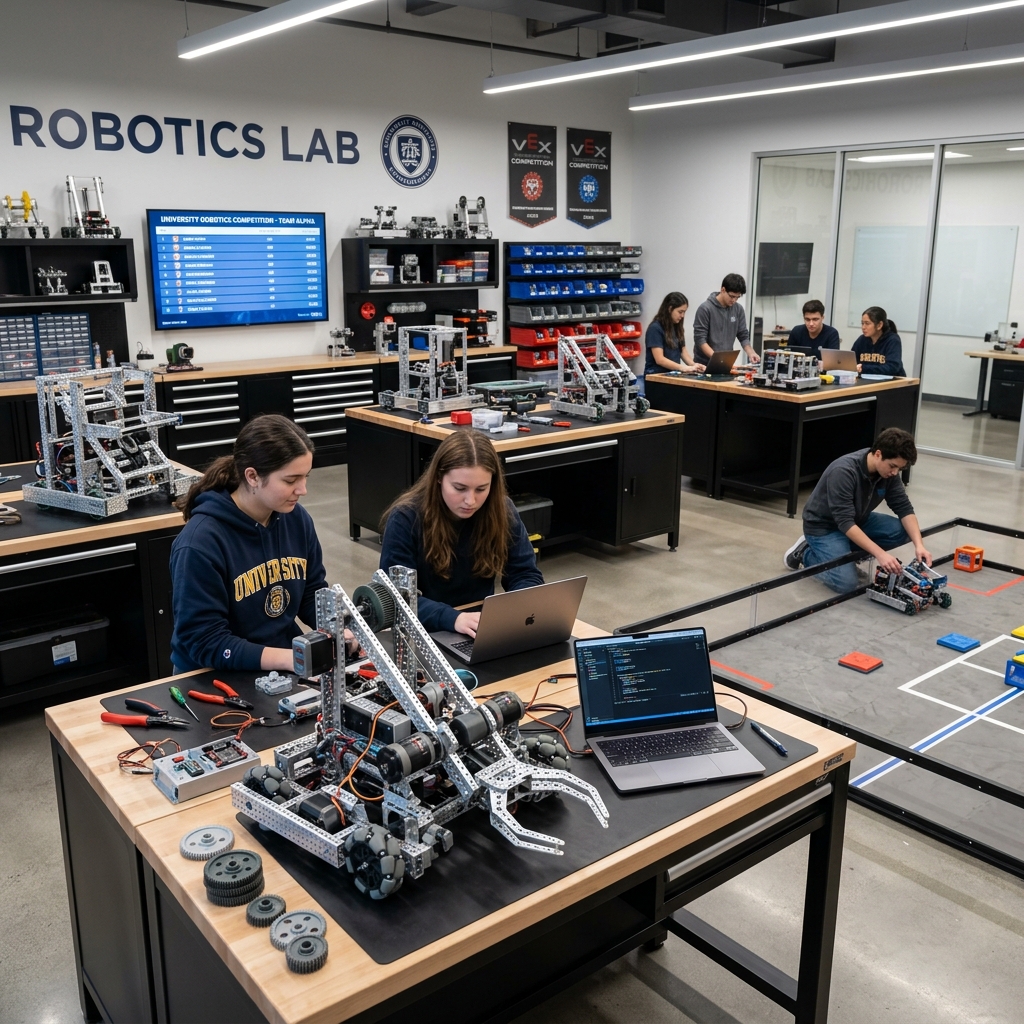
VEX V5 equipment for design, construction, and university competitions (VEXU).
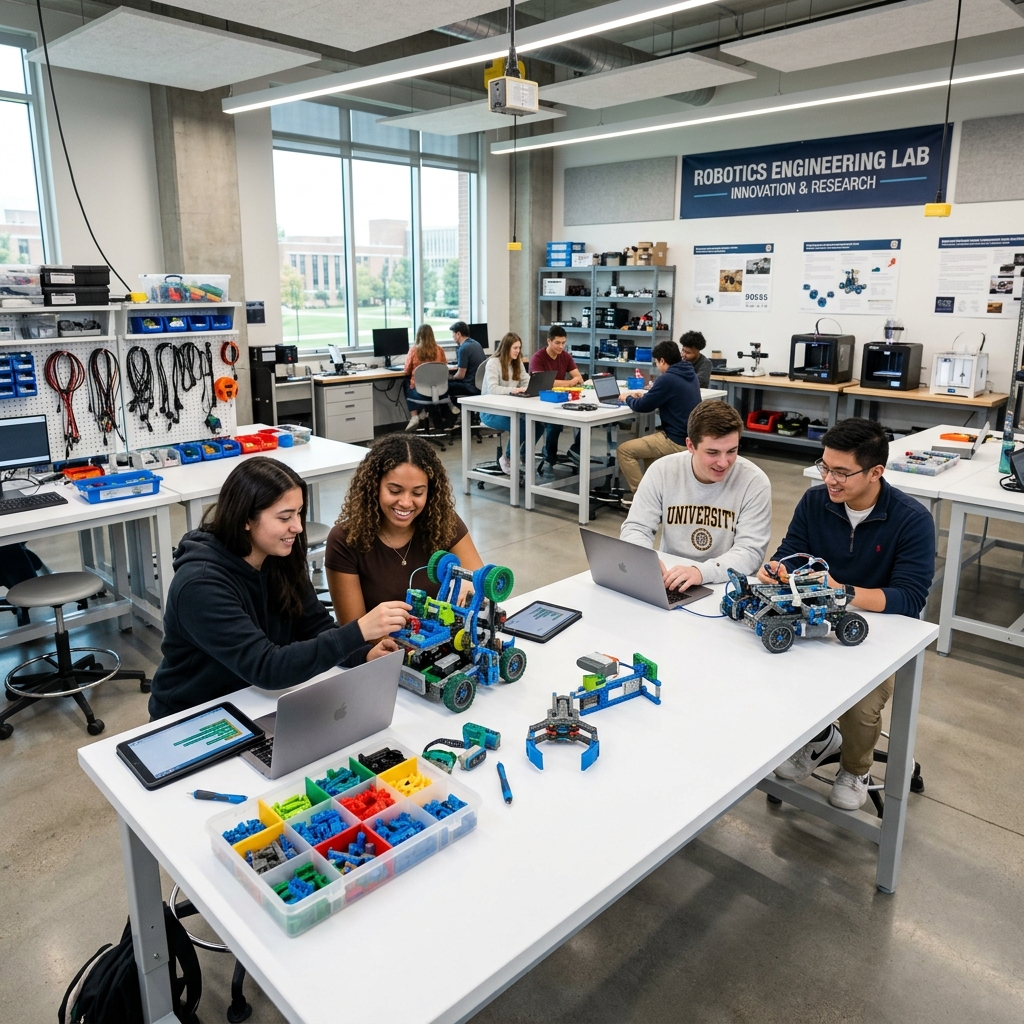
Logic and engineering development with VEX IQ equipment focused on competitions.
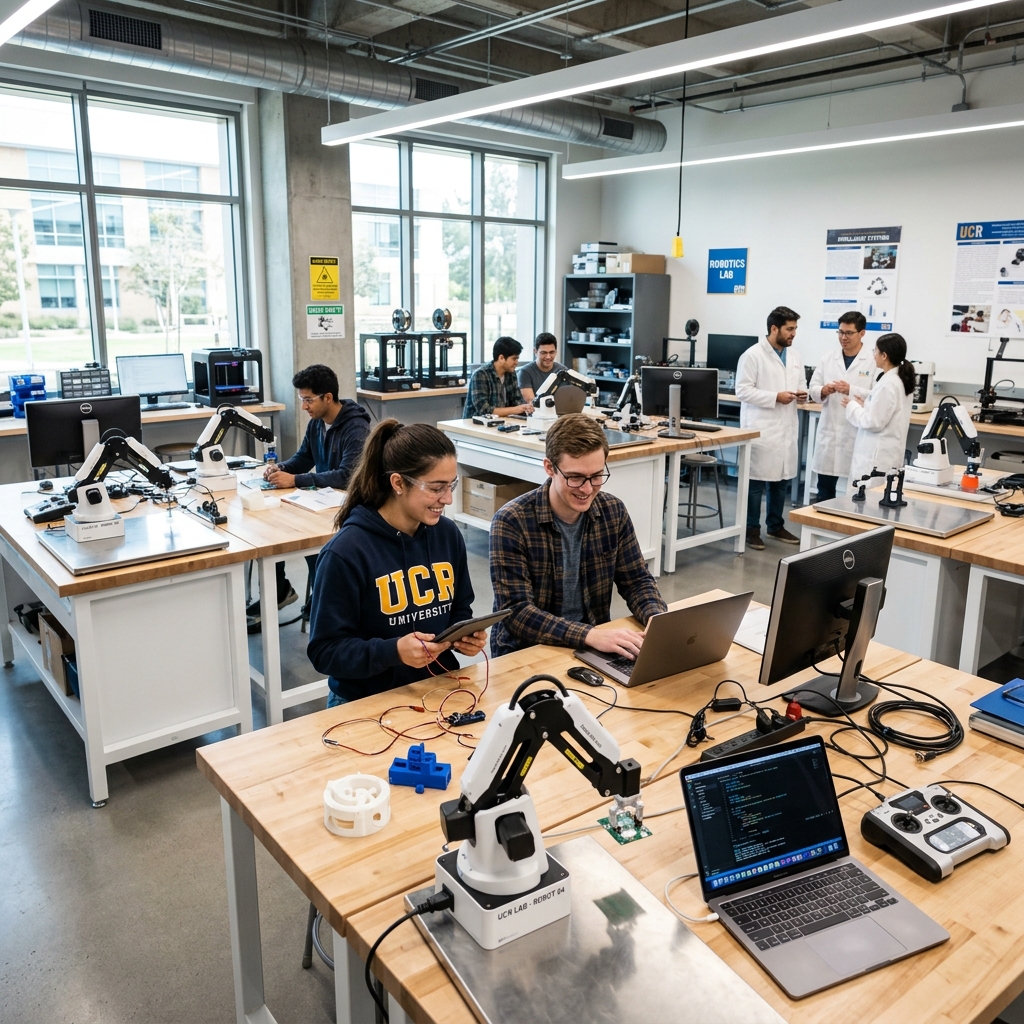
Industrial automation practices with Dobot robotic arms.
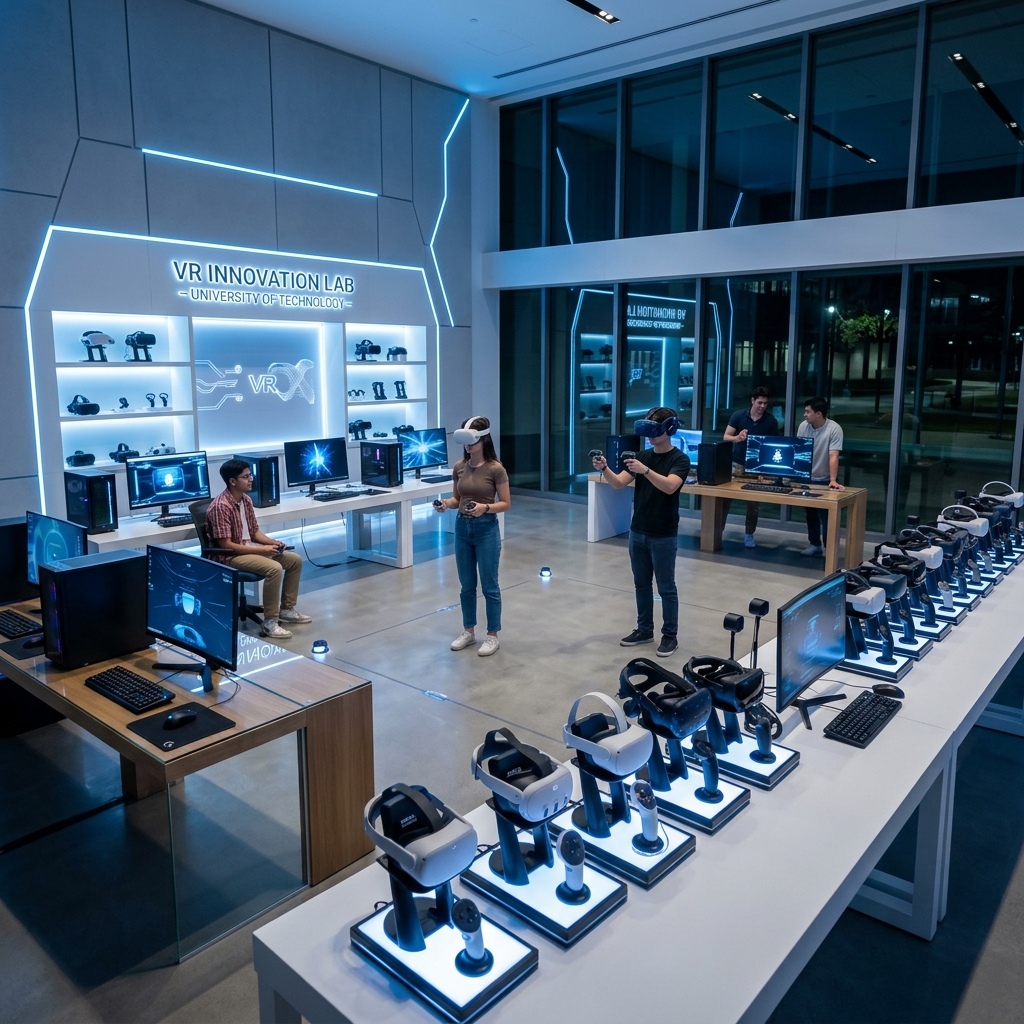
Development of immersive environments and simulators with Pico Neo 3 Pro headsets.
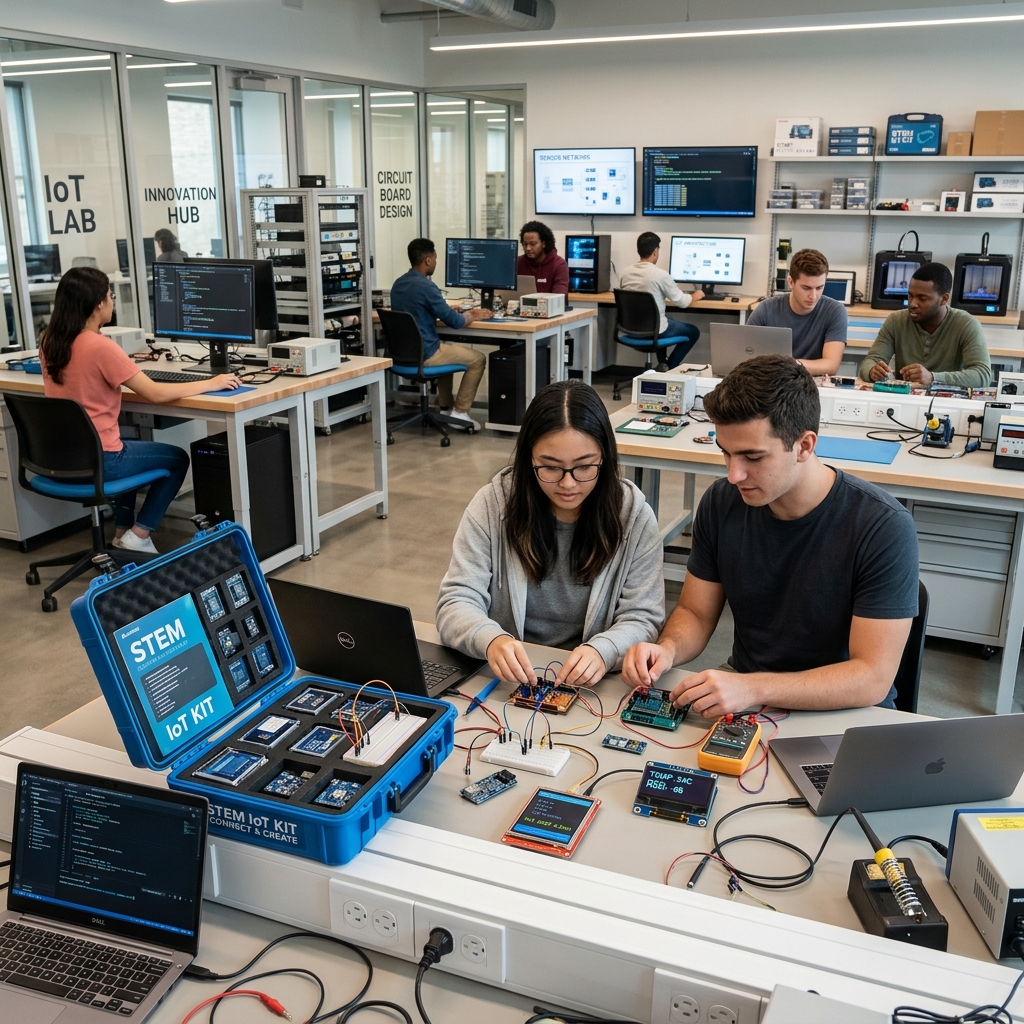
Development of embedded systems with CrowPi kits and Raspberry Pi laptops.
In addition to academic formation, ITICs includes complementary activities, projects, workshops, visits, clubs, and collaborative experiences that strengthen leadership, teamwork, communication, and professional vision. It is also reinforced through official academies, certifications, technical clubs, and community activities.
Conocer los Clubes Estudiantiles